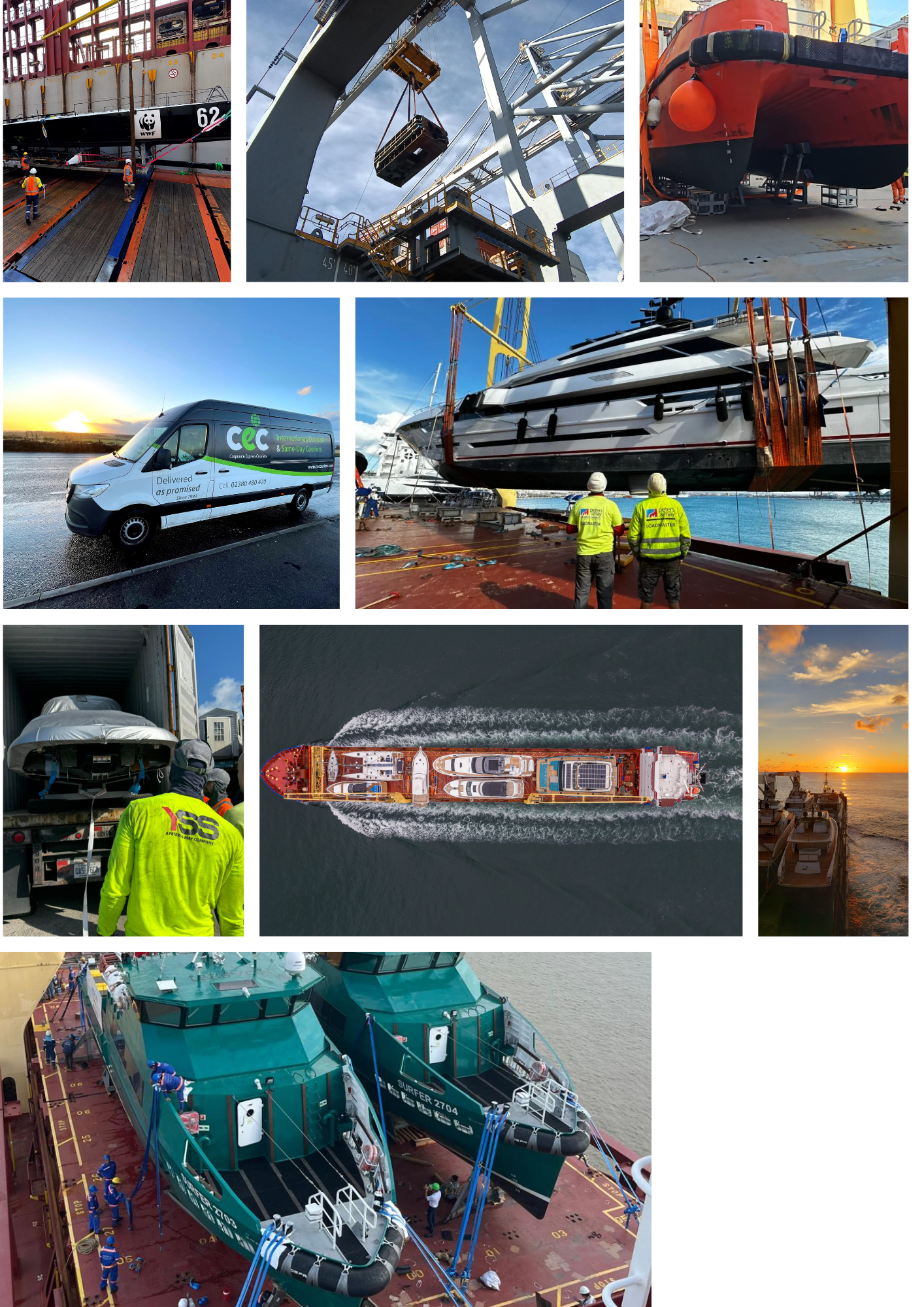

Selling a yacht is not always straightforward. Even in active markets, yachts can remain listed for extended periods while owners and brokers work to reach the right buyers.
Yachts are marketed globally. Online listings, brokerage networks and international boat shows mean the eventual buyer may be located in a completely different region to where the vessel currently sits.
In today’s brokerage market, that scenario is increasingly common. Industry data indicates that yacht brokerage transactions reached around £4.8 billion in value across 661 yacht sales during the first three quarters of 2025 (IYC Global Sales Market Report).
This global reach has changed the dynamics of yacht sales. A vessel listed in one location may attract serious interest from buyers in another market entirely, and relocation can quickly become part of the sales process.
Traditionally, yacht transport has been associated with delivery after a sale — moving the vessel to its new owner or relocating it between cruising grounds. Increasingly, however, logistics can play a role earlier in the process, helping owners and brokers respond to international demand or position a yacht in a market where it may attract a wider audience.
Different regions often attract different buyer profiles. The Mediterranean, the United States and the Caribbean remain the most active brokerage markets, but demand is also expanding into regions such as the Middle East and parts of Asia, according to market analysis from YATCO.
In some cases, owners may consider relocating a yacht to improve visibility, reduce competition or place it closer to active buyer markets. Relocation is not always the right solution, but understanding the logistics options available helps owners and brokers evaluate whether it could support the wider sales strategy.
Transport can still be arranged once a buyer has been secured, and Peters & May regularly delivers yachts to new owners worldwide.
However, when international buyers are involved, early planning makes the process far smoother. Routes, lift windows and seasonal schedules all influence timing and cost, so discussing these factors early helps define what is realistically achievable. Considering logistics early also avoids unnecessary pressure later. Owners and brokers can move quickly when the right buyer appears rather than evaluating transport options under tight deadlines.
In some cases, relocation may even become part of the marketing strategy itself. Positioning a yacht in a major brokerage hub such as Palma, Fort Lauderdale or the Mediterranean charter market can increase exposure and place the vessel directly in front of active buyers.
Market activity also highlights how active the international brokerage market has become. Brokerage data published by Denison Yachting shows that 125 yachts over 78 feet sold in the first quarter of 2025 alone (Denison Yachting Market Report) — a year-on-year increase of roughly 44 per cent. As buyers increasingly search globally, the location of a yacht can become an important factor in reaching that demand.
At the same time, industry analysis indicates that while total transaction numbers fluctuate year to year, the average size and value of yachts sold continues to increase, reflecting sustained demand at the upper end of the market (Superyacht Market Analysis – Slipcase).
For owners and brokers, this reinforces a simple reality: the right buyer may not always be in the same region as the yacht.
At Peters & May, transport conversations often begin long before a yacht moves. Understanding routing options, timing and practical constraints helps owners and brokers make informed decisions if relocation becomes part of the sales process. Early discussions can also highlight factors such as seasonal vessel schedules, port access and regulatory requirements
In practice, certain types of yachts often perform better in particular markets. Brokerage activity in recent years has shown strong sales volumes in hubs such as Fort Lauderdale, Palma and the wider Mediterranean, where buyer concentration, brokerage presence and seasonal activity create favourable market conditions.
Understanding where a yacht is most likely to attract serious interest can therefore become an important consideration when planning a sale. In some cases, relocation may help position a yacht closer to the most active buyer markets.
If you are marketing a yacht internationally or considering relocation as part of your sales strategy, speaking with our team early can help clarify the options and ensure transport is arranged smoothly when needed.